The Chart
Charted waters — the castaways being made into talking books for this island, each one scouted and verified against his own surviving words. They are the island’s manifest, not a shop shelf. The first of them — Byron — already stands on the shelf below, with Bulkeley & Cummins beside him, and as each next book is built, his card drops in beside them.
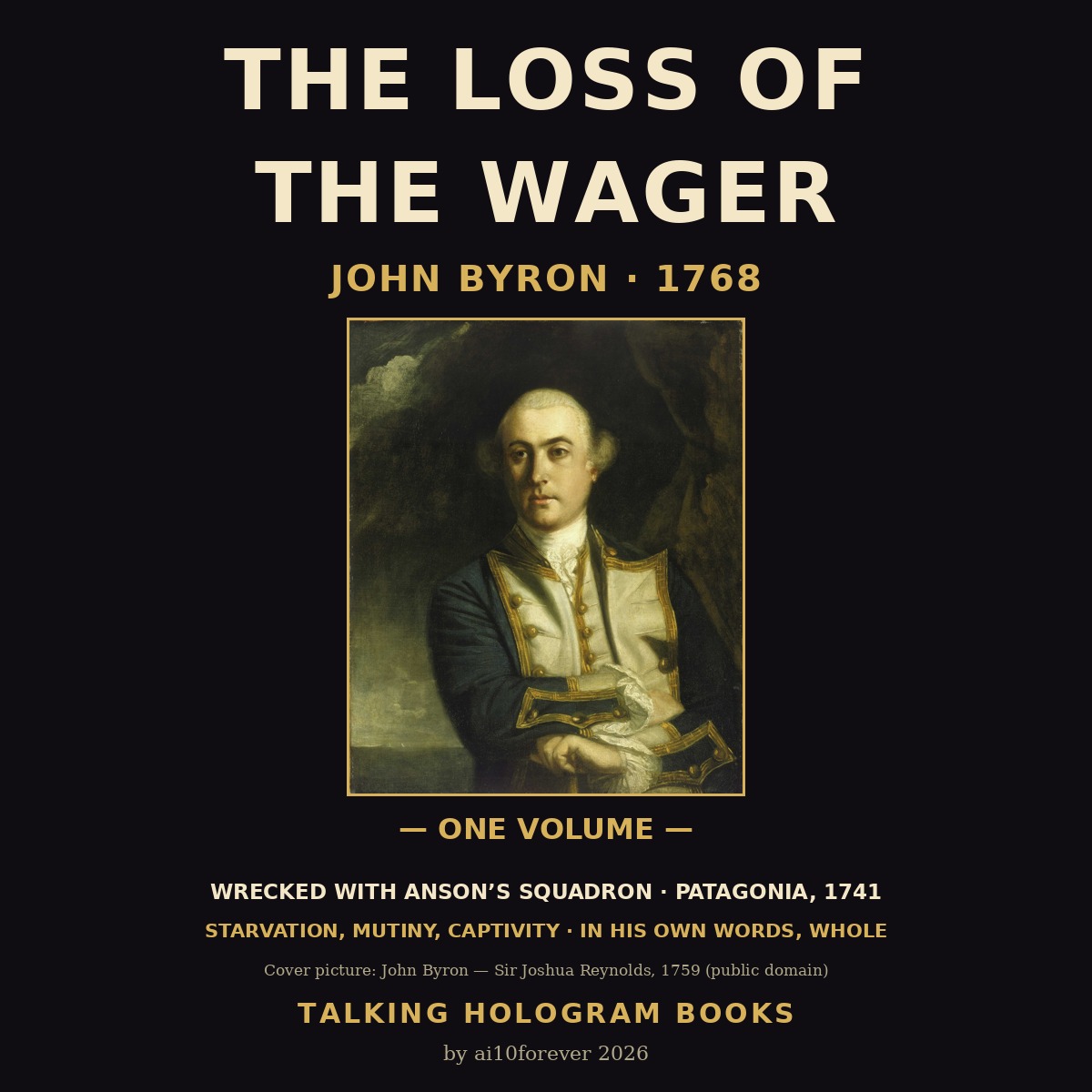
John Byron — The Wager
Wager Island, Patagonia
A midshipman of eighteen — grandfather of the poet Lord Byron — wrecked with HMS Wager on a desolate island, starved, abandoned by the mutinous majority, and carried prisoner through Spanish Chile. He came home nearly six years later and wrote the whole of it himself (1768).
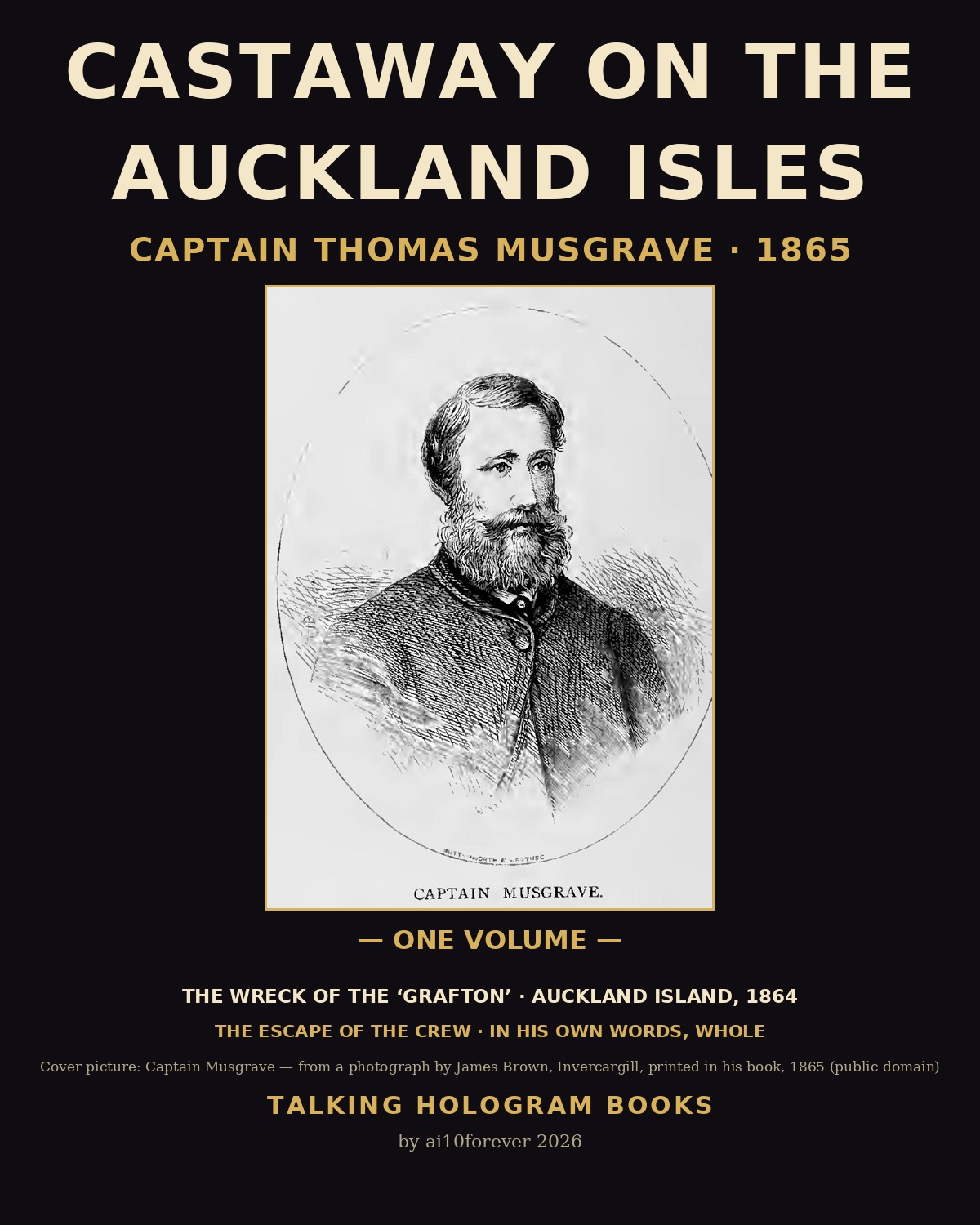
Thomas Musgrave — The Grafton
Auckland Islands
Twenty months ashore in the subantarctic: his five men built a forge and a hut, kept school and Bible readings, tamed the island — then rebuilt the ship’s boat and sailed her 400 kilometres to fetch help for the two left behind. Every man lived. Told day by day from his own private journal. Now aboard — this book stands on the shelf below.
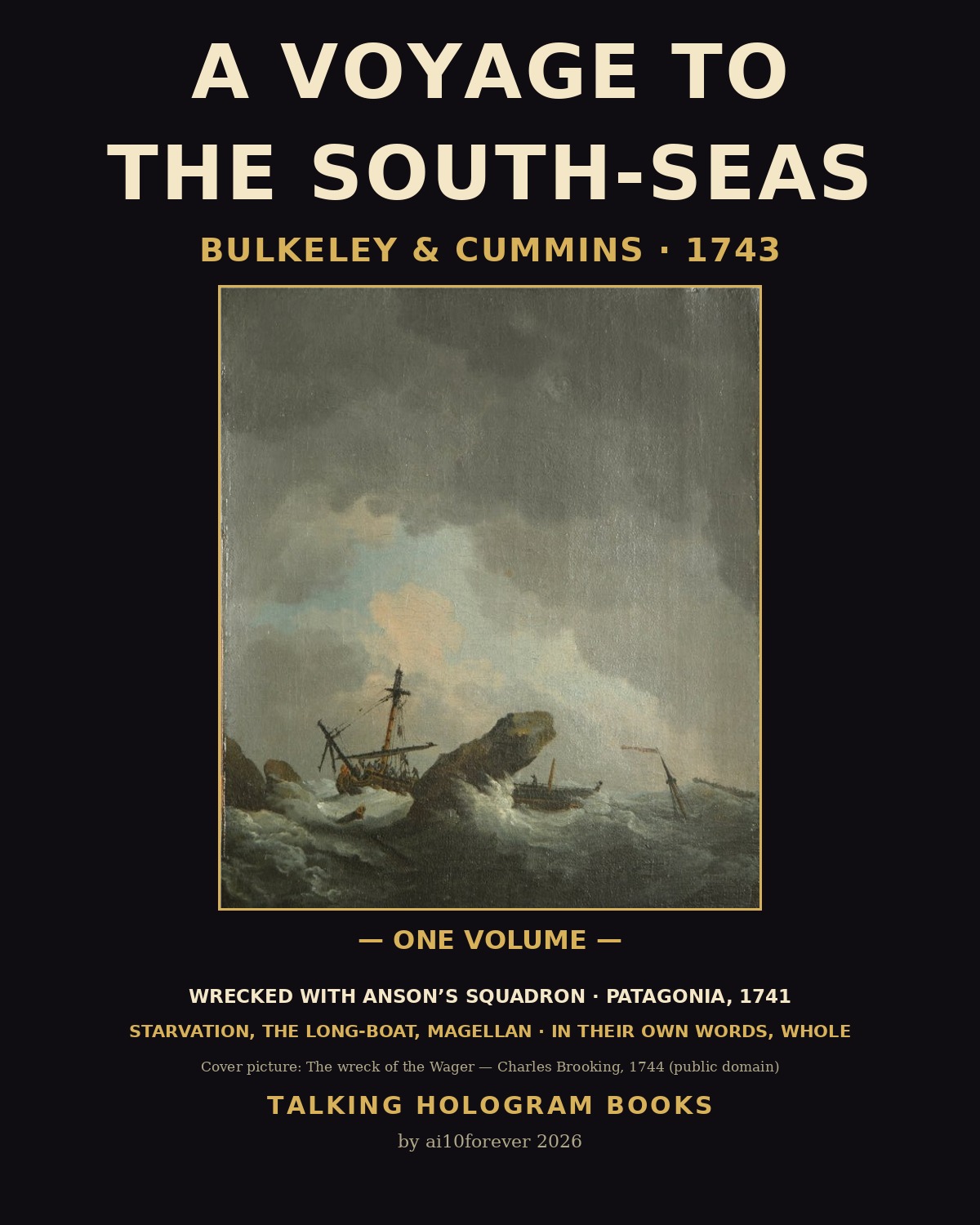
Bulkeley & Cummins — The Wager, the Other Side
Wager Island & the Strait of Magellan
The gunner and the carpenter who led eighty souls away in a patched longboat — the escape Byron’s book calls mutiny. They got home first and published their own signed journal (1743) to answer him. One wreck, two crews, two books that accuse each other. Now aboard — this book stands on the shelf below.
Robert Drury — Madagascar
Southern Madagascar
Wrecked at sixteen and held fifteen years — the longest captivity on this chart — herding cattle, fighting in wars, escaping and retaken, until a ship redeemed him. His Journal (1729) is the fullest early picture of Madagascar ever written in English.
Charles H. Barnard — The Falklands
New Island, West Falklands
An American sealing captain who rescued a wrecked British crew — and while he was ashore gathering food for them, the men he had saved stole his brig and left him. Eighteen months on seal meat and wild hogs; when his deserters crawled back starving, he forgave them and fed them. His own book (1829), with his own chart.
Alexander Selkirk — The Real Robinson Crusoe
Juan Fernández Islands
Four years and four months utterly alone, living on goats, turnips, and prayer, until Woodes Rogers picked him up “clothed in goat-skins.” No word Selkirk wrote survives — his rescuers tell the story, and his book will say exactly that on its face, the way this house names an absence rather than filling it.
Philip Ashton — Roatán
Roatán, Bay Islands
A Marblehead fisherman of nineteen who slipped ashore from a pirate ship and hid while they hunted him — then sixteen months alone with no tools, no fire-making kit, and no company but prayer. His own relation (1725), printed three years after Crusoe — only his was true.
The Shelf
The first castaways stand on the shelf below — hear a free preview, and one tap takes you to the buy door, like every shelf in the fleet.
TAP THE MIRROR
step back through to the bookstore
talkinghologrambooks.com